
What's the difference between a power flush and a chemical flush?
A chemical flush puts a cleaning solution into your central heating, circulated by your existing pump, to break down rust deposits, sludge and other muck in the radiators and pipework. We then drain and rinse the system properly and add an inhibitor to help stop corrosion happening again.
A power flush uses a separate specialist machine to pump water and cleaning chemicals around the system at a higher flow rate, often reversing the flow to shift stubborn deposits. It removes significantly more built-up sludge than ordinary chemical circulation. Both use chemicals. The specialised pumping and flushing process is the difference.
When do you need a power flush?
On a system absolutely choked with sludge, putting chemicals in is a waste of time. Here's how I match the job to what I find.
| Situation | What I'd recommend |
|---|---|
| Radiators heating fine, system just needs routine cleaning | Chemical flush, if cleaning is needed |
| A little sludge, but circulation is still good | Chemical flush |
| Several radiators cold along the bottom | Consider a power flush after checking the cause |
| Radiators taking ages to heat up because of sludge | Power flush |
| Repeated sludge-related pump problems | Power flush, with further investigation |
| Installing a new boiler | Thorough clean to manufacturer requirements; method depends on system condition |
| Very old pipework or radiators with corrosion | Inspect first. Power flushing may not be suitable |
How do I decide on a real job?
Say you've a three-bedroom semi in Douglas, built in the 1990s, with an oil boiler, ten radiators and heating that hasn't been properly cleaned in years. The radiators upstairs are roasting, the ones downstairs only half warm, and the sitting-room radiator is stone cold along the bottom.
I'm thinking sludge straight away, but I'd check the radiator valves, circulation pump, heating zones, system balance and the condition of the heating water before recommending a power flush.
A small amount of contamination with good circulation gets a chemical clean. Thick black magnetite sludge throughout, poor circulation and cold patches on several radiators has me leaning towards a power flush. The SEAI also identifies cold radiator bottoms as a likely sign of sludge, although cold radiators can have other causes.
Is the more expensive flush always better?
Not necessarily. A relatively clean system doesn't need a full power flush just for the sake of it. But in badly restricted pipework, a circulating chemical cleaner won't necessarily shift the blockage, because it has to reach the deposits to work. An aggressive flush on a badly corroded old system can also expose weak spots and leaks, so I assess the pipework and radiators before connecting a machine.
How do you stop the sludge coming back after a flush?
- Inhibitor: Corrosion inhibitor added at the correct concentration.
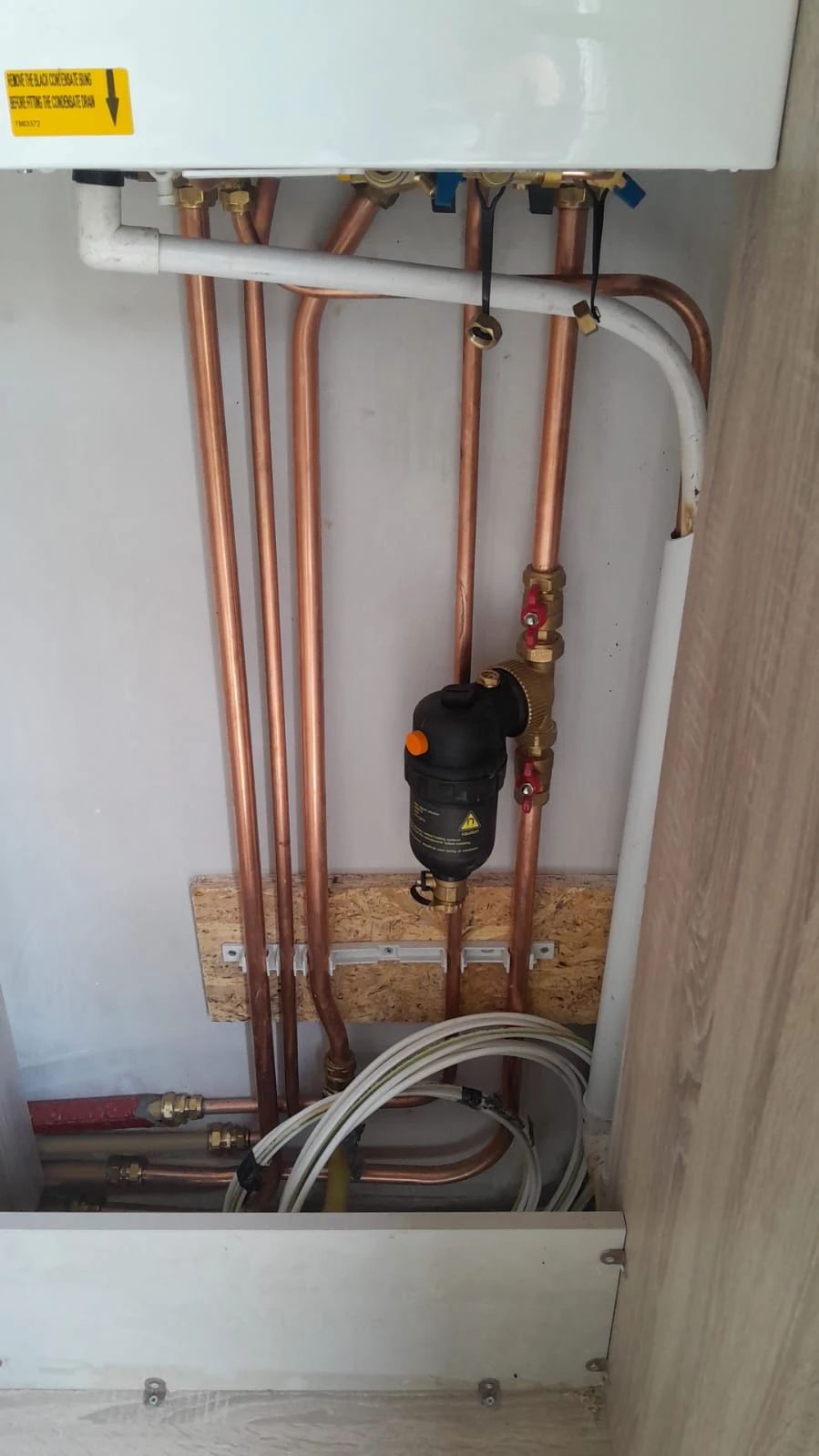
- Magnetic filter: A magnetic filter, where suitable, to catch circulating magnetic debris.
- The underlying problem: Sorted, whether that's air entering the system, poor water quality or a fault causing repeated corrosion.
Skip these and you could spend good money cleaning the system only to see the same problem develop again. A flush also won't repair a faulty pump, a seized radiator valve or a poorly balanced heating system.
Which flush should you choose?
If it was my own house in Cork, I'd start with the least invasive cleaning method that's likely to work.
So: a chemical flush for a reasonably healthy system that needs cleaning, and a power flush for confirmed, widespread sludge and restricted circulation, provided the system is suitable.
One question tells me a lot: are your radiators cold at the bottom but hot at the top, or are some not heating up at all? Those are two different symptoms, and not necessarily the same job.